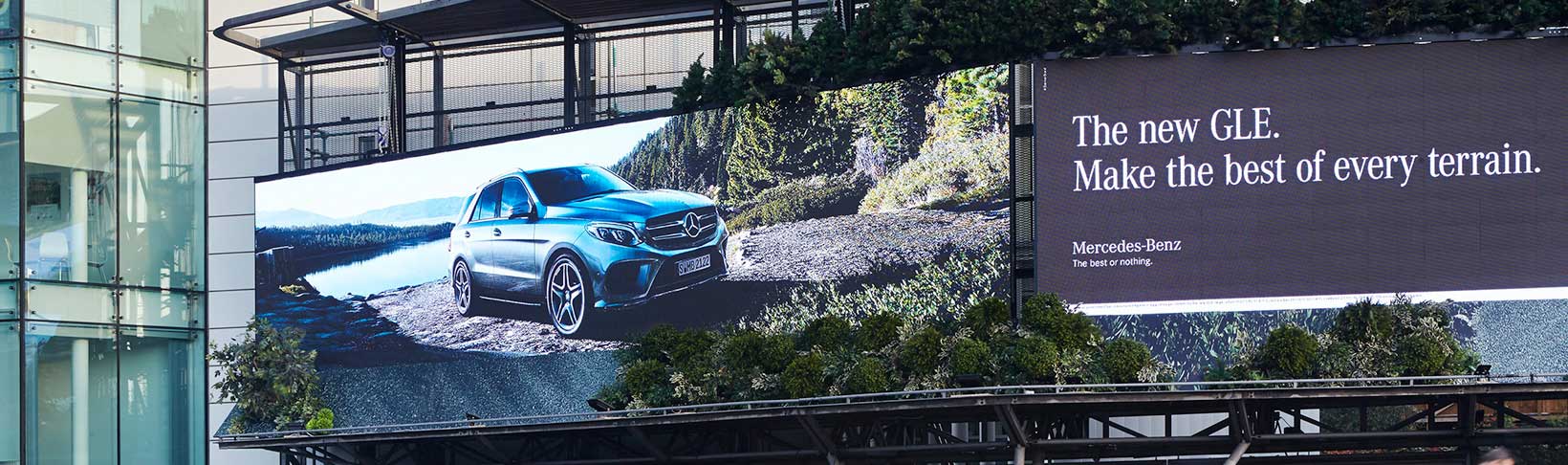
Which LED display is the best value? Hint: You should NIT pick when buying your LED display
One of the most important considerations for purchasing the correct display is where you will be using it. Less expensive usually means less bright LED display. A sign manufactured with diodes that emit less intensity is fine for some indoor uses, but would be disastrous outdoors where the sunlight would overpower the image.
Have you ever wondered why it is so difficult to view your cell phone display on a bright, sunny day? Its because the intensity of the suns light is many times more powerful than the light emitting through the device display in your cell phone. In order for an LED sign to be properly visible in outdoor daylight conditions it must have a minimum rating of 2,000 NITs, which is proven to offer premium daytime visibility.
Not understanding this important aspect could leave the buyer bewildered and disappointed when, at first, he or she thought that they were getting a fantastic bargain only to have purchased the wrong display. So, how do you know which is appropriate?
First, know your NITs
NIT is a measurement of visible light intensity as measured at the light source. Your computer screen probably has 200 to 300 NITs of visible brightness. If you were to try and see your computer screen outdoors in the sunlight it would be very difficult if not impossible. Thats because your computer screen doesn't have enough visible light intensity. Your LED Sign must have enough light intensity or it won't be as visible in outdoor lighting conditions as your competitors.
5,000NIT minimum is the average for exterior LED displays, while Ultravision LED requires 6,500NIT of its displays. Indoor brightness is typically 2,000NITs.
- From the Latin word nitere, meaning to shine; NITs are used to measure display intensity or brightness
- NITs, when used in conjunction with contrast ratio and viewing angle, determine the quality of the image in the desired application
Do not be misled by some claims
Be very wary of those that will claim 8,500NIT! More likely than not, these bright displays are the results of overdriving the diodes with extra power. Power is boosted to achieve a false NIT reading; a less expensive diode not built for the extra power surging into it day after day is likely used and the lifespan of the diodes are cut in about half.
The displays may be more intense and brighter but the added power driving the diodes will shorten the life of the diodes by about half. Typically, the lifespan of a correctly powered light emitting diode display is about 100,000 hours, or about 10 years. And the energy consumption for the LED display will also be more expensive.
About Ultravision LED: William Y. Hall is President of the privately owned company based in Addison, Texas with offices in China. Ultravision LED specializes in turnkey LED display integration from the LED display, to installation, service, maintenance and even affordable factory financing. Ultravision LED's technological advancements continue to transcend digital communications systems for wide-reaching industries including sports and entertainment, retail, urban spectaculars and digital advertising companies. Information about Ultravision LED and turnkey integrated solutions for schools, retail and advertising applications can be found at www.ultravisionled.com or by calling 214-260-4500.